2026 PKU CS International Summer School Opens
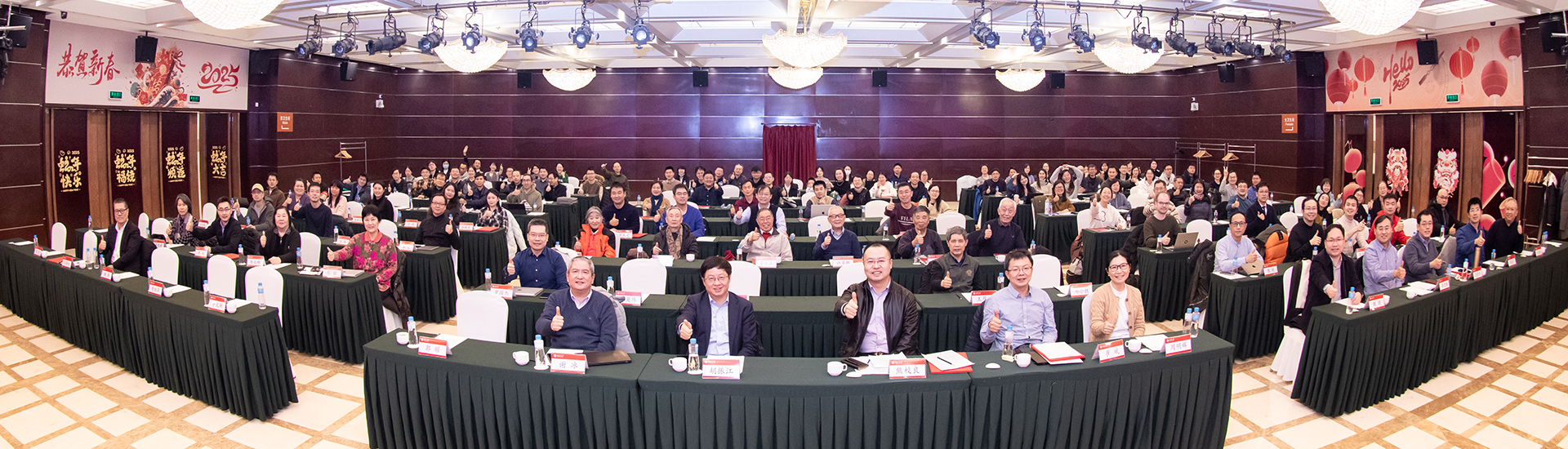
On July 6, 2026, the Fourth International Summer School of the School of Computer Science at Peking University officially commenced at the Yanyuan Campus. Young students from around the world gathered together to embark on a two-week journey of academic exploration. This year’s summer school welcomed 17 undergraduate international students majoring in computer science or related fields from overseas universities, including the University of Washington Seattle, the University of Edinburgh, the Australian National University, King Fahd University of Petroleum and Minerals, Hanoi University of Science and Technology, Chulalongkorn University, the University of Canterbury, and Egypt-Japan University of Science and Technology. In addition, more than 10 Chinese students from universities across China joined the program, forming a diverse and open learning community characterized by mutual exchange and shared growth.
At the opening ceremony, Professor Zhou Minghui, Vice Dean of the School of Computer Science, delivered the opening remarks. She extended a warm welcome to students from around the world and expressed her hope that, through academic courses and visits to leading technology companies, students would gain a comprehensive understanding of the School’s broad spectrum of disciplines, explore cutting-edge developments in computer science, and experience the vibrant innovation ecosystem of Beijing. She encouraged students to exchange ideas, inspire one another, and build lasting friendships through cross-cultural communication, while expanding their academic horizons and global perspectives at Yanyuan, a renowned center of learning and scholarship.

(Remarks by Vice Dean Zhou Minghui)
Following this, Professor Hu Zhenjiang, Dean of the School of Computer Science, delivered a speech introducing the School’s overall academic structure. He noted that the School’s research areas encompass three major domains: Computer Applications and Intelligence, Software and Theory, and Hardware and Systems. The courses offered in this year’s summer school focus on key areas including data analytics, system design, natural language processing, and computer vision, with approximately one-third of the curriculum dedicated to cutting-edge topics in artificial intelligence. This reflects the School’s strong commitment to and forward-looking vision for AI development. Professor Hu also introduced the planned visits to technology companies such as Huawei and Xiaomi, as well as the cultural experience activity at the Summer Palace. He expressed his hope that students would not only explore advanced AI technologies but also gain a deeper appreciation of Chinese cultural heritage, achieving an integration of technological innovation and humanistic understanding.

(Remarks by Dean Hu Zhenjiang)
The opening ceremony also featured a special address by Professor John E. Hopcroft, the 1986 Turing Award laureate, Chair Professor at Peking University, and Director of the Center for Frontiers of Computing Studies. Drawing upon his personal experiences interacting with numerous Nobel Prize and Turing Award laureates, Professor Hopcroft encouraged students to identify fields that genuinely inspire and excite them and to pursue those areas with long-term dedication. He emphasized that many outstanding scientists share a common quality: they remain deeply committed to the research areas they truly love. As he stated, “They actually had a strategy, work on what interests and excites you.” He further remarked that “an era of transformation is an era of opportunity,” noting that artificial intelligence is profoundly reshaping social structures and patterns of work. He encouraged students to think long-term, identify meaningful directions for investment and growth amid the AI revolution, and seize the opportunities presented by this transformative era.

(Remarks by Professor John E. Hopcroft)
During the student self-introduction session, participants from different countries and regions shared their academic backgrounds and expectations for the summer school. Dominik from the University of Edinburgh expressed his appreciation for the School’s comprehensive research system and hoped to gain a systematic understanding of the latest developments across multiple areas of computer science through the program. Khaled from King Fahd University of Petroleum and Minerals said he looked forward to exploring the diverse research fields within computer science through this opportunity. Students from Chulalongkorn University and Hanoi University of Science and Technology noted that China’s rapid development in artificial intelligence has been impressive and expressed their anticipation of experiencing the atmosphere of cutting-edge AI research firsthand through the summer school.
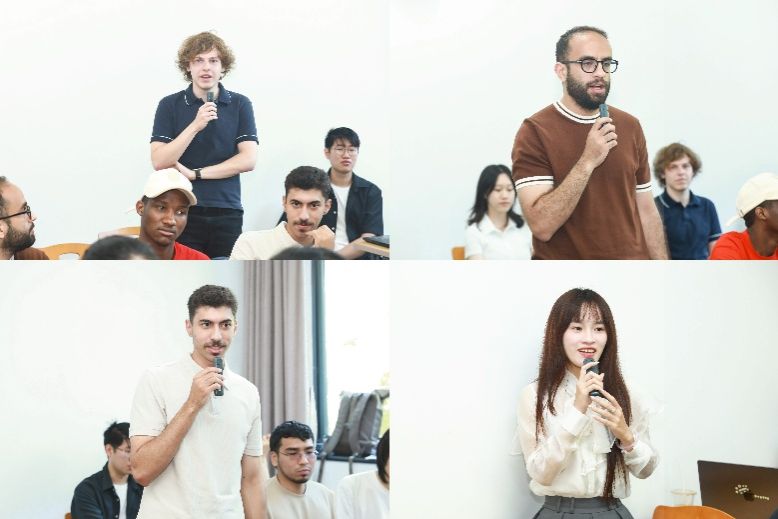
(Student self-introductions)
Subsequently, faculty representatives from eight research institutes within the School introduced their respective research directions and representative achievements. Covering a wide range of frontier areas, including software, hardware, artificial intelligence, computer vision, networks, the metaverse, big data, and theoretical computer science, these presentations provided a comprehensive overview of the School’s research landscape and offered students valuable academic guidance for further exploration.


(Research institute representatives’ presentations)
Over the next two weeks, participants will take part in academic courses, research activities, corporate visits, and cultural experiences. Leveraging its outstanding educational resources and international academic platform, the School of Computer Science at Peking University will provide students from around the world with opportunities to gain deeper insights into the School’s academic strengths, research environment, and the landscape of Chinese higher education. Through this program, students will broaden their global perspectives, strengthen cross-cultural understanding, and lay a solid foundation for future academic pursuits and potential further study at Peking University.

(Group photo)