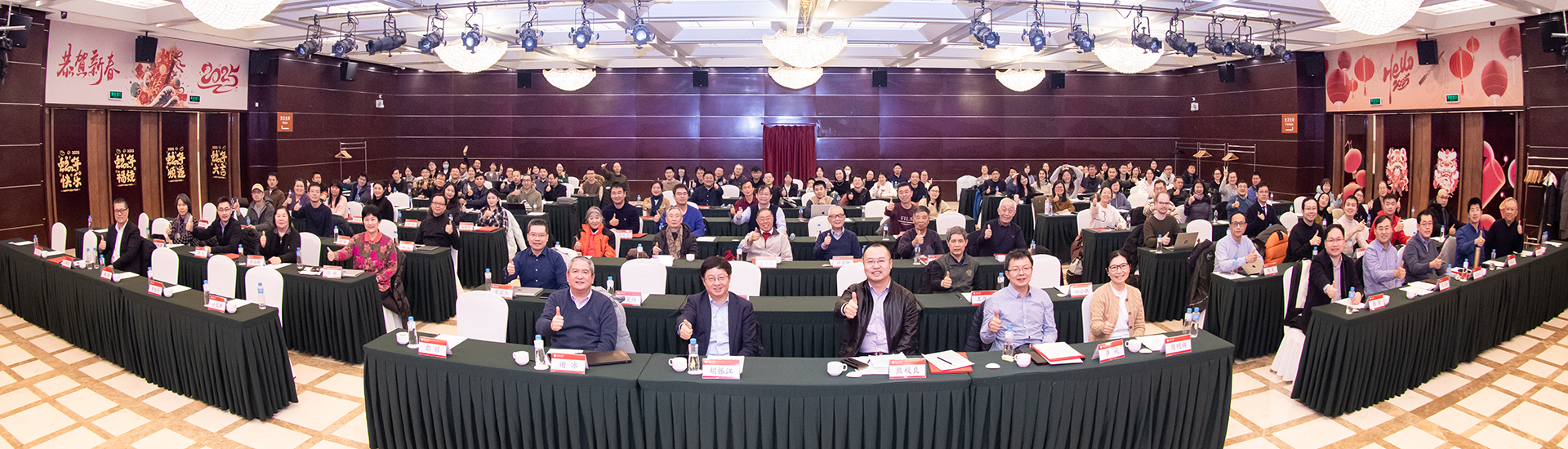
On October 28, 2026, the Office of Internationalization of the School of Computer Science at Peking University held a research sharing and exchange event for international students. The event brought together 24 international students from countries including the United States, the United Kingdom, Canada, the Netherlands, Germany, Russia, Brazil, Türkiye, India, Malaysia, and the Philippines. Zhou Minghui, Vice Dean of the School of Computer Science, attended the event, along with Yang Shu, He Wenbin, and Wu Yizi from the Office of Internationalization.
At the beginning of the event, Vice Dean Zhou Minghui delivered opening remarks, welcoming the students and encouraging them to exchange academic ideas, learn from one another, and broaden their academic horizons by sharing research experiences in a relaxed and friendly atmosphere.

Peterson, a 2026-entry PhD student from the Philippines, shared his experiences and challenges in conducting research on embodied AI. He introduced several research projects he had participated in and their related achievements, covering vision-language models (RoboBrain), policy models (Action-Sketcher), reward models (RoboDopamine), evaluation frameworks (WorldSimProbe), and world models (EvophysWorld). He also discussed his experience contributing to a startup and reflected on his research over the past year, offering insights for junior students.
Gireesh, a third-year PhD student from India, presented his research on decision-making and execution for long-horizon, multi-step robotic tasks. He explained how improvements in outcome prediction, performance evaluation, intermediate-goal planning, and action execution can help reduce decision errors and improve task completion rates. His research was validated through benchmark testing and real-robot experiments. His work, HDFlow, was accepted as a Spotlight paper at ICML 2026 and presented in Seoul.

Dai Gaole, a PhD student from Canada who entered the program in 2022, delivered a presentation titled “From Observation to Representation to Simulation: An Imaging-Based Virtual Cell World Model.” He reflected on his research journey at Peking University and shared his evolving perspective on artificial intelligence—from using AI, to understanding it, and ultimately to advancing beyond its current limitations. His work has progressed from applying multimodal large language models to biomedical image analysis to identifying and addressing their limitations, and further toward integrating AI with clinical diagnosis and treatment, drug discovery, and imaging hardware to explore new ways of solving real-world problems.
Ali, a 2025-entry PhD student from Iran, presented his research under the title “Bridging Semantic Effectiveness and System Efficiency: A Scalable MVR-Aware Hybrid Retrieval and Caching System.” He introduced his research interests and related achievements, focusing on how a scalable hybrid retrieval and caching system can improve the effectiveness and operational efficiency of semantic database retrieval. He also discussed connections between different research areas and shared his personal research experiences.

Following the presentations, students engaged in discussions on research topics, methodologies, and academic development. One participant noted that the event not only offered a deeper understanding of senior students’ research experiences and achievements but also provided an opportunity to ask questions and exchange ideas. For international graduate students, such events also serve as a platform to share common experiences, support one another, and strengthen their sense of belonging.
The event provided an open and welcoming platform for academic exchange among international students at the School of Computer Science, encouraging experience-sharing and interaction across different year groups. The School will continue to organize a variety of exchange activities to support international students’ academic and personal development and foster an open and inclusive international academic environment.
Author: Wenbin He
Reviewed by: Minghui Zhou